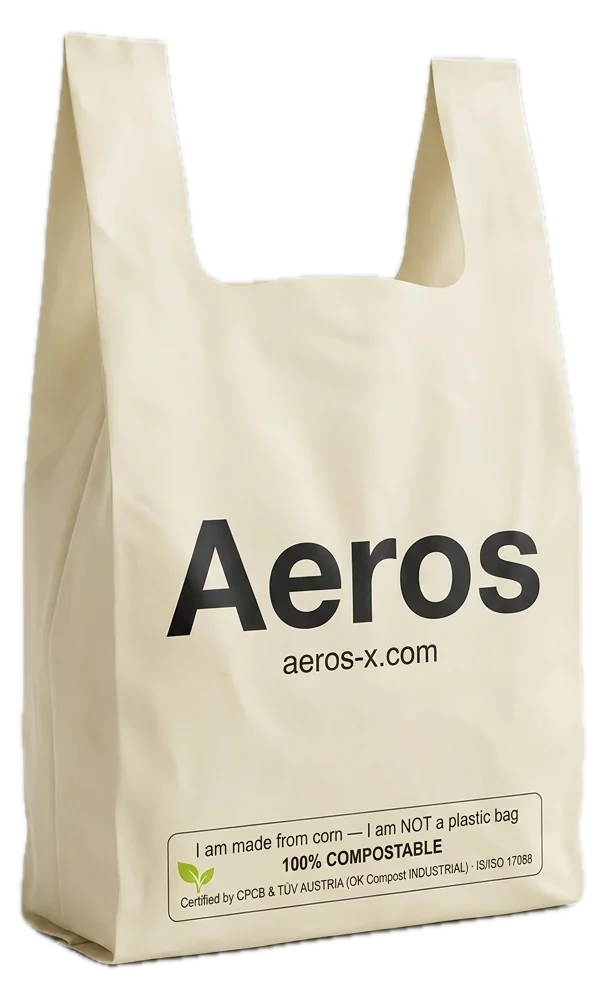
Not a plastic bag.
Single-use plastic carry bags are restricted or banned across most of India. These are made from a corn-starch and PBAT blend — plant-based, food-grade, water-resistant — independently certified by CIPET, CPCB, and TUV Austria, and marked on every bag so your customer can see it.
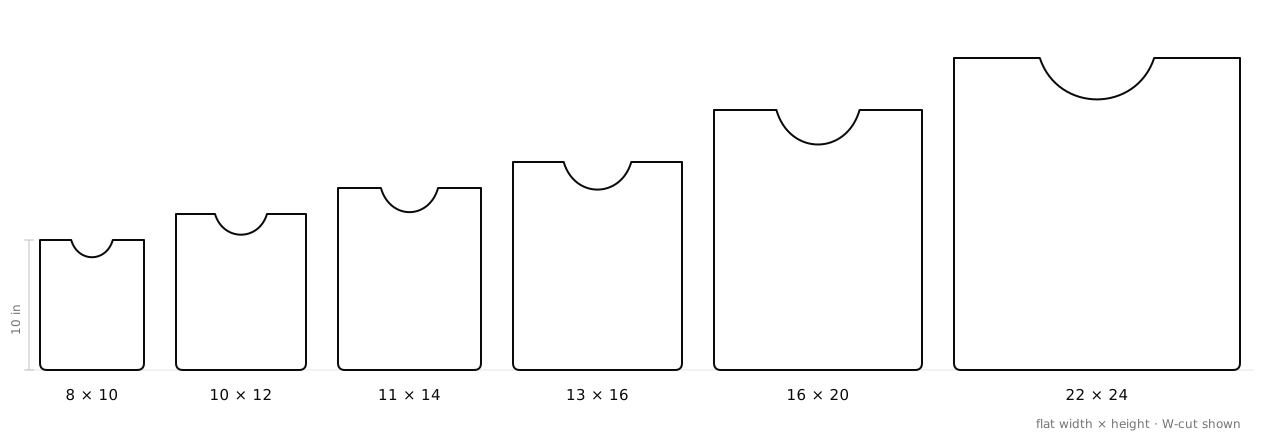
Six standard sizes.
Every format is made in the same six sizes. Drawn here to scale against each other, so you can see what actually fits an order before you pick one.
What a kilo gets you.
These are sold by weight, not by piece — so this is the number that matters when you are working out how much to order. Approximate counts per kilogram, by size and film thickness.
| Size | 20 micron | 25 micron | 30 micron | 45 micron | 50 micron | 60 micron |
|---|---|---|---|---|---|---|
| 8 × 10 in | 372 | 298 | 248 | 165 | 149 | 124 |
| 10 × 12 in | 248 | 198 | 165 | 110 | 99 | 82 |
| 11 × 14 in | 193 | 154 | 129 | 86 | 77 | 64 |
| 13 × 16 in | 143 | 115 | 95 | 63 | 57 | 47 |
| 16 × 20 in | 93 | 74 | 62 | 41 | 37 | 31 |
| 22 × 24 in | 56 | 45 | 37 | 25 | 22 | 18 |
Four formats, one film.
The same certified compostable film, converted into the formats a shop or kitchen actually needs.
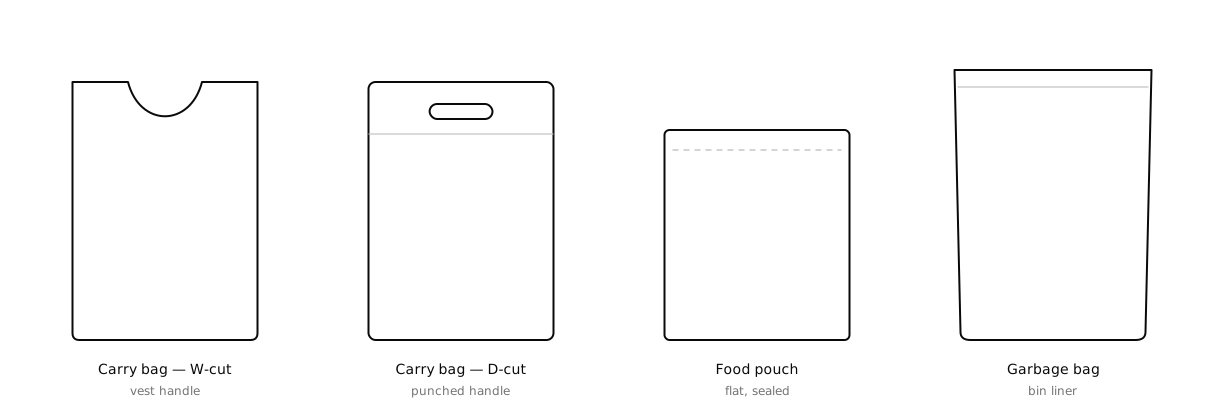
Pick the format and the grade.
Carry bags and pouches come in two film grades; pouches add a translucent option where the customer should see the product. Minimums are per size, and every format is sold by the kilo.
Carry bags — W-cut & D-cut
The direct replacement for the banned plastic carry bag. W-cut vest style for retail and takeaway counters; D-cut punched handle for a cleaner branded look at sweet shops and boutiques.
Food pouches
Flat pouches for snacks, staples, and dry goods. The translucent film runs about 80% transparency, so the product shows through without giving up the compostable spec.
Garbage bags
Compostable bin liners — the wet-waste stream can go to composting bag and all, instead of a plastic liner that has to be separated out first.
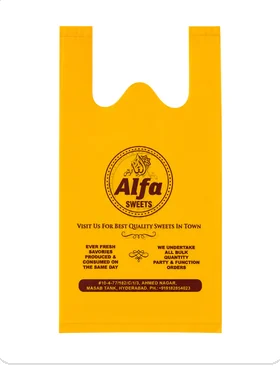
Your brand, on a bag that composts.
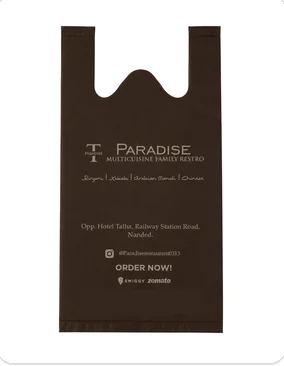
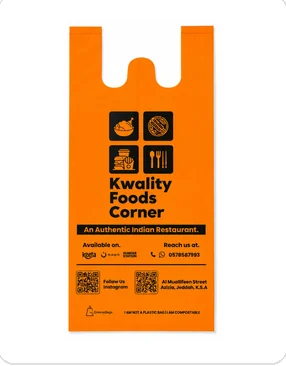
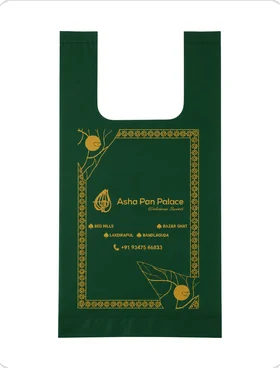
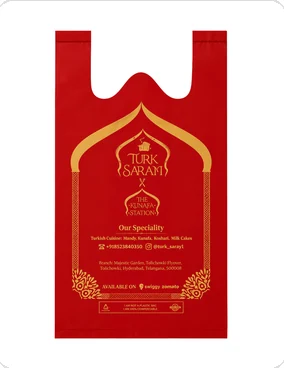
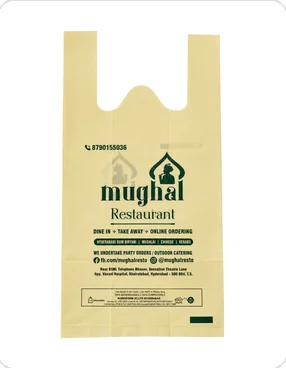
Full-colour custom print, up to 3 colours. A handful of the printed runs we have shipped — sweet shops, restaurants, and cloud kitchens across India and the Gulf.
Plants in. Soil out.
Corn-starch + PBAT, not petro-plastic
A plant-based blend rather than conventional polyethylene. It handles like a plastic bag on the counter — it just does not persist like one afterwards.
Independently certified
CIPET to ISO 17088, CPCB registration for India, and TUV Austria to EN 13432 for international compostability. Three separate bodies, not a self-declaration.
Composts in 180 days
In industrial composting conditions the film breaks down within 180 days, leaving no microplastics and no visible residue behind.
Holds up in the monsoon
Water beads off the film, so the bag keeps its shape and its load in the rain — the failure mode that makes paper a poor swap for plastic in an Indian monsoon.
Marked so customers can tell
Every bag carries "I am made from corn — I am NOT a plastic bag · 100% compostable" alongside the certification marks. It answers the question at the counter before it gets asked.
Printed with your brand
Food-safe printing up to 3 colours, on one or both sides, with a one-time plate charge per colour per side per size. Bag colour can be customised too.
Choosing a thickness.
Rate is the same whichever thickness you pick, so this is purely a strength decision — a big bag in thin film is the one complaint worth avoiding.
- 8 × 10 · 10 × 12 in
- Any thickness from 20 to 60 micron works
- 11 × 14 · 13 × 16 in
- 30 micron and above recommended — 20 to 25 micron only for light loads
- 16 × 20 · 22 × 24 in
- 45 micron and above ideal · 30 micron acceptable · 20 micron not recommended
Where these go.
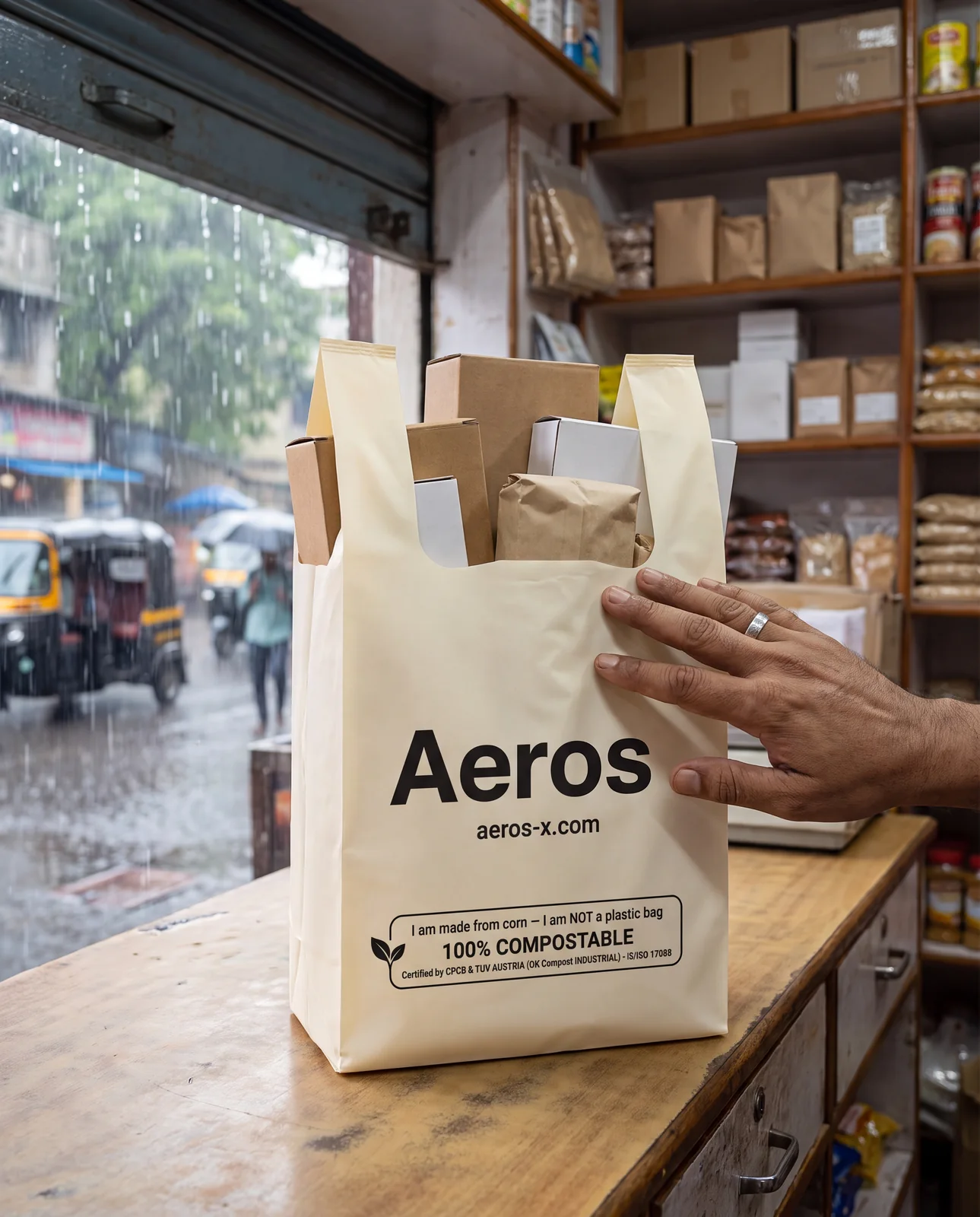
Retail & kirana counters
The everyday carry bag, across the six standard sizes that cover a grocery run, a sweet box, or a single-item purchase.
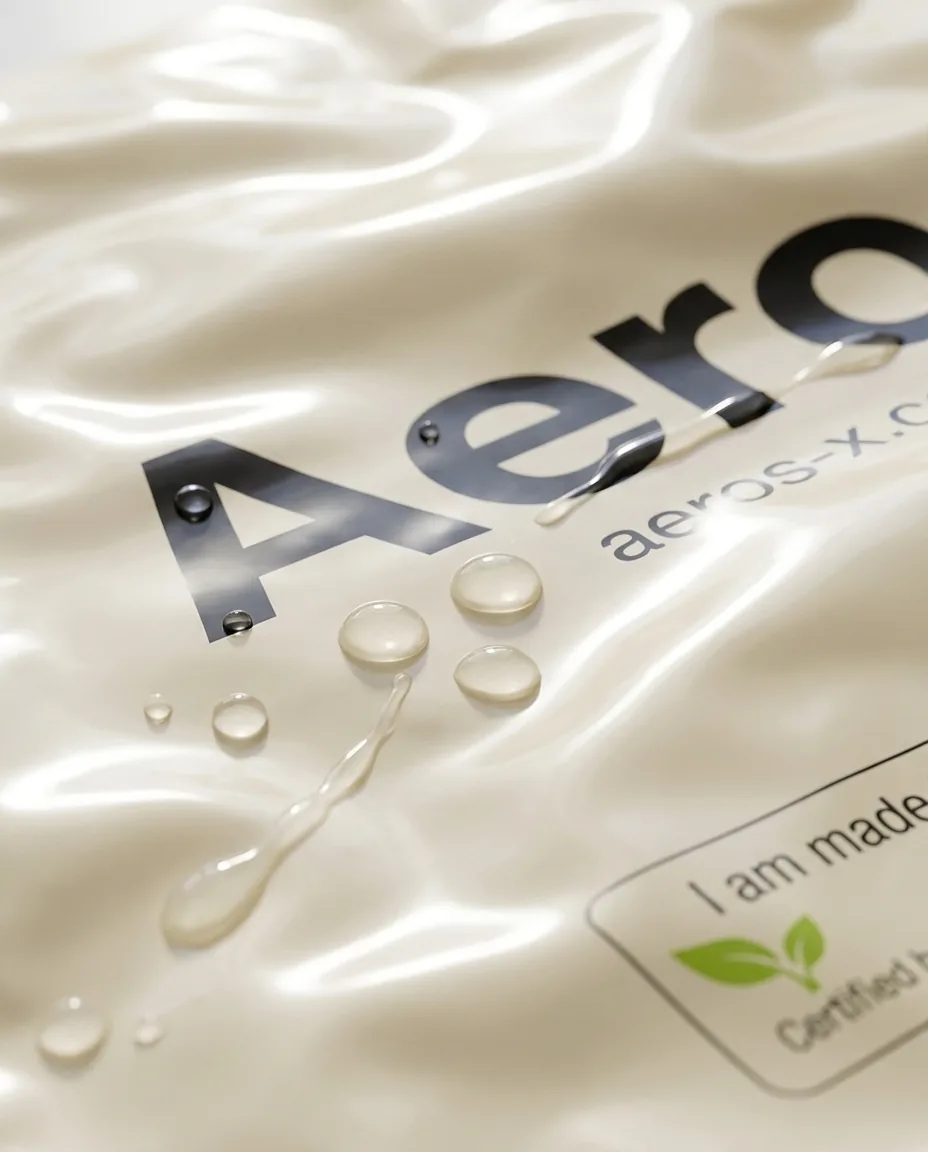
Restaurants, cafés & takeaway
Food-grade and water-resistant, so hot and oily takeaway does not compromise the bag between the counter and the customer.
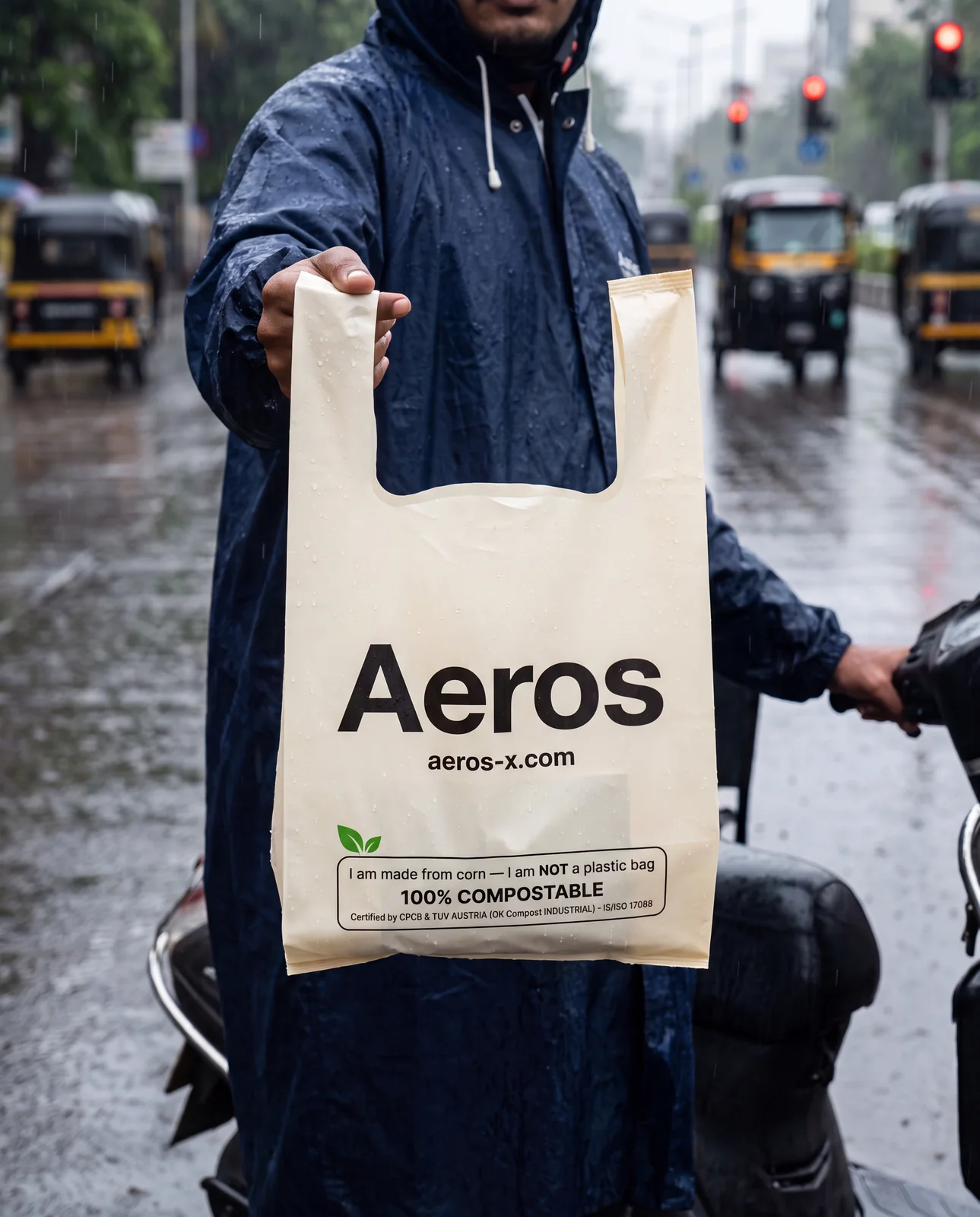
Cloud kitchens & delivery
Holds shape in the rain on a bike, and the compostable marking travels with the order — visible sustainability at the customer's door.
Kitchens & offices — waste streams
Compostable bin liners let wet waste go to composting with the liner still on, instead of being tipped out and the bag binned separately.
Packaged snacks & dry goods
Food pouches in plain, Grade B, or translucent film for shelf-packed staples — translucent where the product should sell itself.
Specifications.
- Material
- Corn-starch + PBAT compostable blend
- Properties
- Food-grade · water-resistant · heat-durable
- Formats
- Carry bags (W-cut, D-cut) · food pouches · garbage bags
- Grades
- Grade A and Grade B · pouches also in translucent (approx. 80% transparency)
- Standard sizes
- 8 × 10 · 10 × 12 · 11 × 14 · 13 × 16 · 16 × 20 · 22 × 24 in
- Thickness
- 20 · 25 · 30 · 45 · 50 · 60 micron
- Custom sizes
- Made to order — send dimensions and volumes
- Sold by
- Weight — rate is the same across every size and thickness
- MOQ — carry bags
- Plain 10 kg per size · printed 50 kg per size
- MOQ — food pouches
- Plain 30 kg per size · printed 50 kg per size
- Printing
- Food-safe, up to 3 colours, 1 or 2 sides · one-time plate charge per colour, per side, per size
- Bag marking
- "I am made from corn — I am NOT a plastic bag · 100% compostable"
- Certification — India
- CIPET (ISO 17088) · CPCB
- Certification — international
- TUV Austria (EN 13432)
- Compost time
- 180 days in industrial composting — no microplastics, no residue
- Packing
- Bulk woven sacks of roughly 23 – 25 kg, marked with size and net weight — not cartoned
- Samples
- Free — ask and we will send them
FAQ.
Why are these priced by weight instead of per bag?
Because the film is the cost, not the shape. The rate is the same across every size and thickness, so a kilo of 20 micron 8 × 10 costs what a kilo of 60 micron 22 × 24 costs — you just get a different number of bags. The table above converts weight to bag count.
What are these actually made of?
A blend of corn starch and PBAT. It is plant-based rather than petroleum-based, and formulated to handle like a conventional bag — food-grade, water-resistant, and heat-durable.
Who certifies them?
Three independent bodies: CIPET against ISO 17088, CPCB for India, and TUV Austria against EN 13432 for international compostability. Certificates are available on request.
Does 180 days mean they compost in my bin?
No — the 180-day figure is for industrial composting conditions, which run hotter and more controlled than a home compost heap. In a landfill or on the roadside these will not break down on that timeline. Plan for the bags to reach an industrial composting stream.
Do these satisfy the single-use plastic rules?
Certified compostable bags are the standard substitute where single-use plastic carry bags are restricted, and ours carry CPCB certification for India. Rules vary by state and change over time — we will share the current certificates so your compliance team can confirm against your local requirement.
What thickness should I order?
Small bags take any thickness. From 11 × 14 in upward go to 30 micron or above, and for the two largest sizes 45 micron and above is ideal. Since the rate does not change with thickness, err heavier on the big sizes.
What is the difference between Grade A and Grade B?
Two film grades at different price points, both certified compostable and both available across the standard sizes. Tell us the application and we will recommend the grade — or send samples of both so you can judge in hand.
What is the minimum order?
Plain carry bags start at 10 kg per size and plain pouches at 30 kg per size. Anything printed is 50 kg per size, plus a one-time plate charge per colour, per side, per size. Samples are free.
How do they arrive?
In bulk woven sacks of roughly 23 to 25 kg, marked with the size and net weight — these are not cartoned, so factor that into your storage.
Order on
the Aeros app.
Place an order in seconds — pricing, stock, and delivery dates are live.